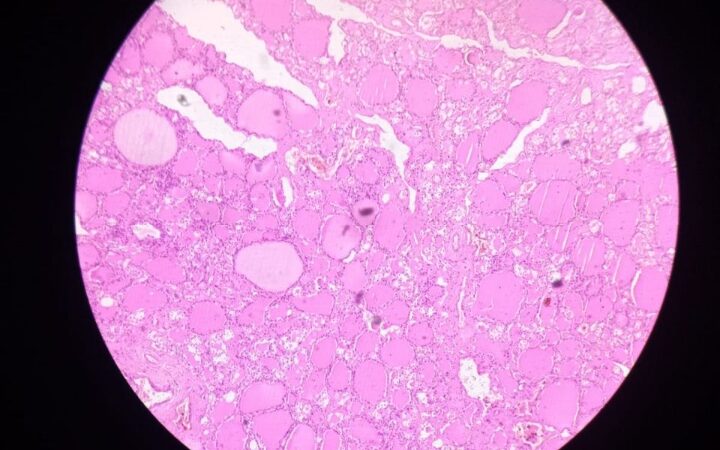

A tumor is not a uniform mass but a city of cell types in contested neighborhoods. Spatial biology — now being applied to bladder cancer in a major new collaboration — reads that city map at single-cell resolution, according to the research announcement.
Traditional sequencing averages a tumor into a single profile. Spatial methods keep the geography: which cells express a drug target, which immune cells are present, and whether the two ever meet. In cancers treated with antibody-drug conjugates and immunotherapy, that geography may predict who responds, the researchers say.
The program will correlate target expression and microenvironment features with clinical outcomes, hunting biomarkers that could guide therapy selection. A parallel project applies single-cell census-taking to residual leukemia, according to the institutions.
The instruments generate staggering data per sample, and computational methods are racing to keep pace. The scientific bet is that organization — not just mutation — is a druggable property of cancer.
If the maps prove predictive, pathology changes character: from describing what a tumor looks like to forecasting how it will behave under treatment. That forecast is the product this science is building.
The collaboration’s design reflects a lesson oncology keeps relearning at great expense: drugs do not fail in general, they fail in particular patients. Antibody-drug conjugates and immunotherapies already work dramatically for a minority of bladder cancer patients; the scientific problem is identifying that minority before treatment rather than after. Spatial maps — target expression measured where the drug must actually arrive, immune cells counted where they must actually fight — are an attempt to move that identification upstream, into the biopsy that starts the case.
There is a commercial logic under the science. Each failed late-line therapy costs a patient time that cannot be refunded; a predictive map converts that cost into sequencing. If the correlations hold, the map becomes part of the prescription — the test and the treatment sold, in effect, as one decision.
Related reading: