New catheter technology for treating dangerous ventricular arrhythmias takes the stage in New York this weekend, where preclinical results will be presented at the 21st Annual International VT Symposium, according to the program announcement.
The technology uses nanosecond pulsed electric fields to ablate faulty heart tissue — ultra-brief pulses intended to destroy target cells while sparing surrounding structures. Two prototype endocardial catheters will feature in a session on recent advances in pulsed-field ablation of ventricular arrhythmias, according to the organizers.
Ventricular arrhythmias are among cardiology’s hardest problems: they can be lethal, the tissue involved sits deep in the heart wall, and conventional thermal ablation struggles to reach it safely. Pulsed-field methods are attracting intense interest precisely because their mechanism differs.
The work remains preclinical, and the distance from prototype catheters to approved therapy is measured in years of trials. Symposium presentations of this kind mark the idea’s passage from laboratory concept toward clinical candidacy, according to the announcement.
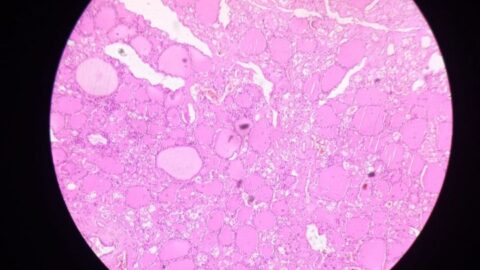
Attendees will judge the depth and durability of the lesions the prototypes create. In this field, those microscopic details decide whether a technology becomes a treatment.
Pulsed-field ablation’s migration from the atria to the ventricles is the field’s central engineering drama this decade. In atrial fibrillation, the technique earned its reputation by sparing structures — esophagus, phrenic nerve — that thermal ablation endangers; the ventricle poses the inverse problem, demanding depth into thick, scarred muscle that surface-sparing pulses may struggle to reach. The symposium’s audience will be reading the lesion data for exactly that tension: selectivity is worthless if the lethal tissue survives beneath it.
The venue matters too. The International VT Symposium is where electrophysiology’s sceptics gather with their longest memories — a field that has buried many elegant technologies between the prototype poster and the clinical trial. A strong showing in that room does not make a treatment, but it recruits the investigators whose trials eventually will.
Related reading: